

On this page (10 sections)
Crash and Roulette: the two house staples
For a volume player, the first real question about Gamdom casino games isn't which one is entertaining — it's which two have stayed central to the catalogue long enough to trust the mechanics. That's Crash and Roulette, and both run on the generic mechanics that define their categories across the whole industry, not a proprietary twist unique to one operator.
Crash is a multiplier-based game where a value rises from 1x until it "crashes" at a random point; players cash out before that happens to lock in a payout, and the round ends instantly for anyone who waits too long.
Roulette is a fixed-odds table game where outcomes are determined by a wheel or its digital equivalent, with a house edge built into the payout structure for every bet type rather than varying by player behaviour.
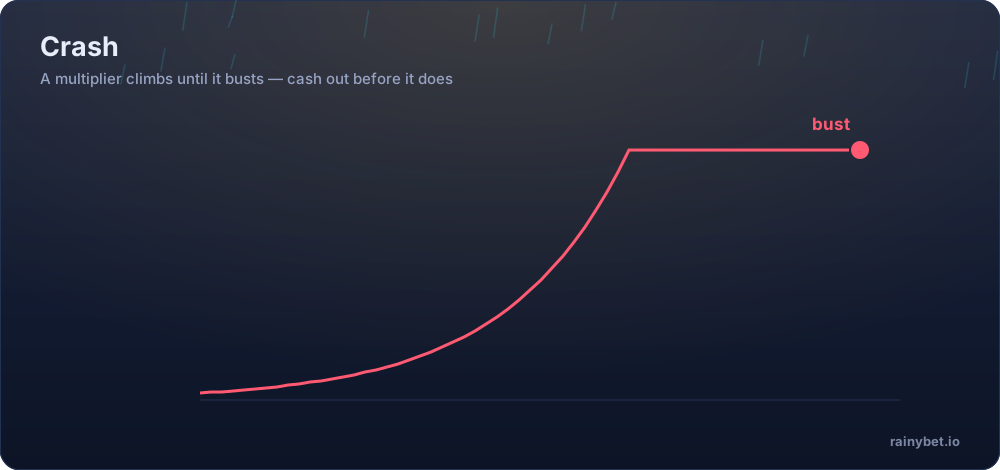
Our Crash simulator lets you test cash-out strategies without wagering real funds, using the same generic mechanic that underlies Gamdom's version of the game.
House edge and rakeback: how they connect
House edge is the statistical margin a casino holds over a player on a given game, expressed as a percentage of turnover it expects to keep over the long run. It is the number rakeback is calculated against, not the number your individual session outcome is guaranteed to match.
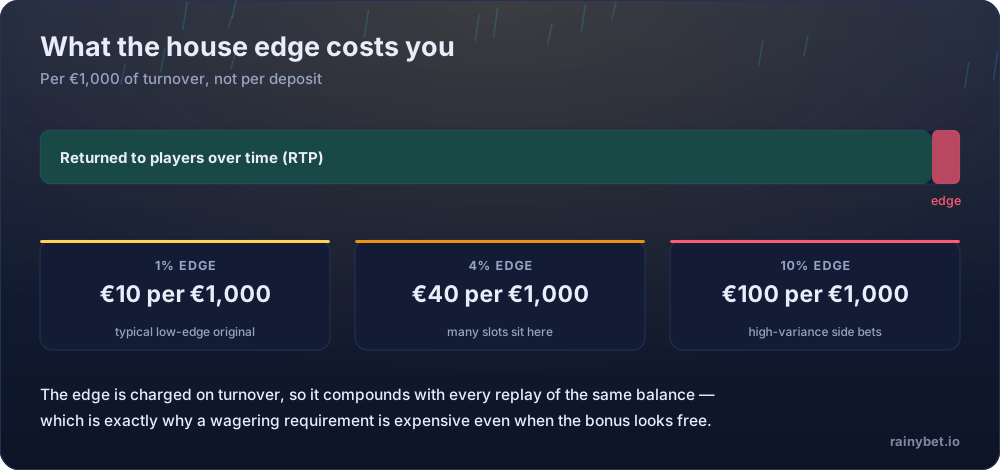
Neither Crash nor Roulette has a published, fixed edge figure for Gamdom specifically. What holds true generically across the category is that rakeback is charged on the margin an edge generates, so a higher-edge game produces faster rakeback accrual for identical stakes — see our house edge guide for the full arithmetic behind that trade.
Betting limits across the catalogue
Before sizing a serious wager, the practical question is what you can actually stake per round before hitting a ceiling. Gamdom sets per-game and per-table maximums that are shown live on the bet slip rather than published here as fixed figures. Always check the bet slip on the specific game before committing real size.
| Vertical | Typical limit behaviour | Where to check |
|---|---|---|
| Crash | Per-round maximum shown directly on the bet slip | Bet slip, live |
| Roulette | Table or per-bet-type maximum shown before you place a bet | Table screen, live |
| Slots | Maximum bet per spin set by the game provider, not Gamdom | In-game paytable |
| Sportsbook | Maximum stake varies by market liquidity | Bet slip at time of placing |
Which games move the VIP ladder fastest
VIP progression is generally driven by turnover, weighted by game type. Because a weighting table is not published as a fixed set of figures for Gamdom, the safest working assumption is that a unit wagered on a high-edge slot counts differently toward VIP progress than the same unit wagered on Roulette — confirm the actual weighting in your account before optimising around it.
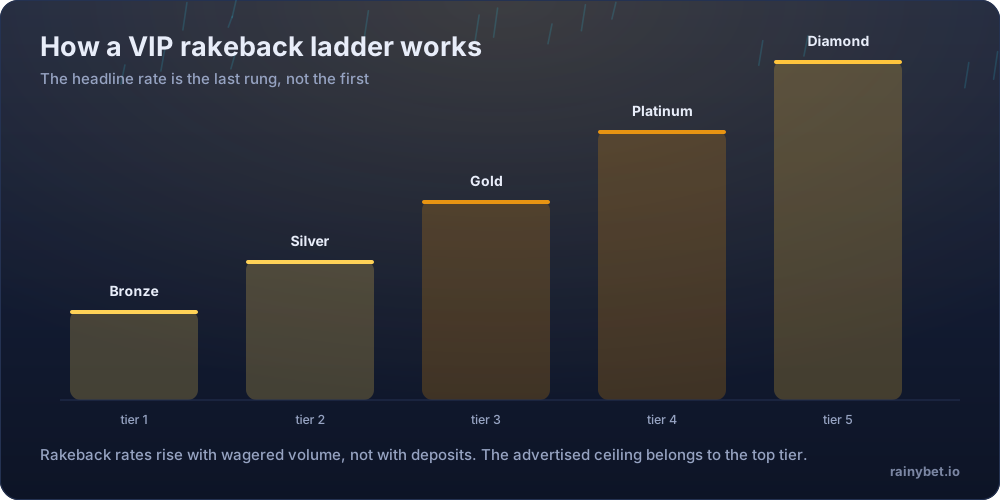
Model your own bankroll and game mix in the EV & Kelly calculator rather than estimating. Full activation mechanics for the boost itself are on our Gamdom promo code page.
The high-edge trap: rakeback speed vs real cost
Do this arithmetic before chasing rakeback speed
A 15% boost on rakeback earned from a game with a meaningful house edge still leaves you paying the rest of that edge, every time you wager. Moving to a higher-edge game purely to accrue rakeback faster is very often a losing trade once you account for what the edge itself costs — the boost discounts the house edge, it never reverses it.
Our wagering calculator makes this concrete with your own stake sizes rather than a general warning.
Full game-by-game breakdown
| Game | Category | Why volume players use it | Our page |
|---|---|---|---|
| Crash | House staple | Fast rounds, one clear cash-out decision per bet | Crash simulator |
| Roulette | House staple | Transparent, fixed-odds mechanics with visible bet types | Roulette mechanics above |
| Originals | In-house mix | Wider variety of risk profiles under one wallet | House edge explained |
| Slots | Third-party | Highest typical edges, fastest rakeback accrual | Gamdom review |
| Sportsbook | Sports | Same wallet, different variance profile via odds margin | How a crypto sportsbook compares |
Cashout speed by vertical
Crash, Roulette and the rest of the catalogue settle instantly within the platform — the outcome and balance update resolve in the same round. Getting that balance out to your wallet is a separate step governed by withdrawal processing, not by which game generated the winnings — timing varies with network load and internal review. Confirm current processing times directly in your account before planning a large cashout around a specific timeline.
Honest pros and cons
What works about Gamdom
- Crash and Roulette are long-standing staples running on transparent, generic mechanics
- One wallet and one VIP ladder means turnover from any vertical counts toward the same progression
- Bet slips show live limits per game rather than requiring a support query
- Casino, Originals and sportsbook all sit under the same rakeback mechanism
What to weigh up first
- Published house edge figures per game are not available
- Game weighting for VIP progress and rakeback is not published as a fixed table
- Chasing rakeback via high-edge games costs more in expected value than it returns
- Per-game maximum bet figures require a live check, not a published reference
Licence, geo-restrictions and playing safely
Licensing. Access is blocked in a number of countries and US states, and the list is maintained by the operator rather than published as a stable document. The current restricted list and licence details live on the operator’s own terms page — read them before you register.
Your side of it. Crypto casinos settle fast, which is exactly what makes them easy to overplay. Before your first deposit at Gamdom, set a deposit cap and a session timer in the account settings — not in your head.
- Deposit limits and self-exclusion tools live in account settings, not support chat
- A losing session is not a signal to raise the stake — it is a signal to stop
- Bonus turnover targets are not a reason to keep playing past your limit
- Free, confidential help: BeGambleAware and Gambling Therapy
Frequently asked questions
What games does Gamdom have?
A community-driven catalogue built around long-standing house staples Crash and Roulette, alongside a wider Originals and slots library and a sportsbook. All contribute to the same VIP ladder and rakeback mechanism.
Is Crash or Roulette better for rakeback accrual?
Rakeback is charged on house margin, not on turnover alone, so a higher-edge game generates more rakeback per unit wagered than a lower-edge one for identical stake sizes. Gamdom does not publish a fixed edge figure for either game. Confirm any specific figure inside the game itself before assuming one accrues faster.
Does Gamdom have betting limits on Crash or Roulette?
Individual game and table limits are set by the operator and are shown live on the bet slip rather than published here as fixed figures. Check the bet slip on the specific game for the live limit before sizing a wager.
Does the 15% rakeback boost apply equally to every game?
Rakeback accrues on the house margin any game generates, so both Crash and Roulette contribute. Whether Gamdom weights different games differently toward VIP progress or rakeback is not published as a fixed table. Confirm the actual weighting in your account before optimising around it.
Is there a maximum bet while the rakeback boost is active?
Deposit bonuses typically carry a max-bet rule to stop a large single wager from clearing wagering too quickly. The 15BOOST rakeback boost isn't a deposit bonus in that sense, and Gamdom does not publish a fixed max-bet figure tied to it — check the promotion's own terms.
What's the difference between Gamdom's Originals and its slots?
Originals and house staples like Crash and Roulette generally run on transparent, generic category mechanics, while slots are licensed from third-party providers and typically carry higher edges. Confirm provably fair verification availability per title directly in the game rather than assuming it applies universally.